Keynote Speaker 1
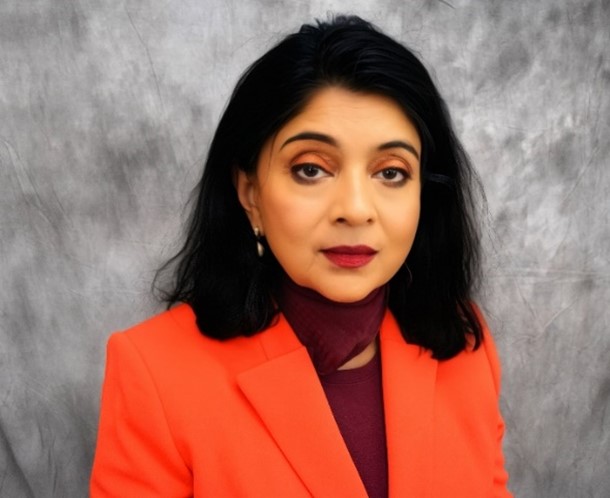
Prof. Bhavani Thuraisingham
ACM/IEEE/AAAS/NAI Fellows
The University of Texas at Dallas, USA
Title: AI for Cyber and Cyber for AI
Abstract:
Artificial Intelligence (AI) and Cyber Security (Cyber) have been evolving for the past 60-75 years. AI was born when Turing published his famous paper in 1950 known as “the Imitation Game” and also called the “Turing Test”. It was essentially about the question “Can Machines Think? Since then AI continued to develop throughout the 1950s, 1960s and 1970s including expert systems and machine learning systems. At the same time, while modern computers were born in the 1940s, by the 1960s much progress was made in various topics in computing including theory, systems and databases. By the late 1960s computer security (known now as Cyber Security or Cyber) techniques such as access control were developed for operating systems and later for database systems. Both AI and Cyber continued to develop independently throughout the 1980s 1990s with some interaction between them. With the growth of the world wide web in 1990s, attacks to web-based systems exploded and various cyber security solutions were developed including those that used AI. Then, with the breakthroughs made in machine learning with the development of deep learning techniques in the early 2000s and the progress in big data technologies around the same time and more recently the large language models (LLMs) since the late 2010s, AI has become the most critical technology for every application including for Cyber. However, AI techniques could themselves be attacked rendering them useless. Therefore, in addition to AI being applied for cyber security solutions, cyber security solutions were also developed for AI systems in the 2010s and beyond. This presentation will examine several aspects of AI for Cyber and Cyber for AI including for security, privacy, integrity, dependability, secure system design, governance, and hardware. We also discuss how quantum computing will revolutionize computing and integrated with AI and Cyber.
Bio:
Dr. Bhavani Thuraisingham is the Founders Chair Professor of Computer Science, the Founding Executive Director of the Cyber Security Research and Education Institute (CSI) at the University of Texas at Dallas (UTD; 2004-2021) and a senior strategist of the Trustworthy and Secure AI Center at UTD since 2023. She is an elected Fellow of the ACM, IEEE, the AAAS, and the NAI as well as the British-based BCS and IMA. Her research interests are on integrating cyber security and artificial intelligence including as they relate to the Cloud and Transportation Systems. She has received several technical, education and leadership awards including the IEEE CS 1997 Edward J. McCluskey Technical Achievement Award, the IEEE CS 2023 Taylor L. Booth Education Award, the IEEE Comsoc Communications and Information Security 2019 Technical Recognition Award, the IEEE CS TC (Technical Committee) Services Computing 2017 Research Innovation Award, IEEE CS TC Multimedia Computing Impact Award, the ACM SIGSAC 2010 Outstanding Contributions Award, the ACM CODASPY 2017 Lasting Research Award, and the ACM SACMAT 10 Year Test of Time Awards in 2018 and 2019, and a 2013 IBM Faculty Award for Secure Cloud Computing. Her 45 year career includes industry (Honeywell), federal research lab (MITRE), US government (NSF) and Academia. Her work has resulted in 140+ journal articles, 300+ conference papers, 200+ keynote and featured addresses, seven US patents, sixteen books, and over 120+ panel presentations including at Fortune Media, Lloyds of London Insurance, Dell Technologies World, United Nations, and the White House Office of Science and Technology Policy. She has also written opinion columns for popular venues such as the New York Times, Inc. Magazine, Womensday.com and the Legal 500, She received her PhD from the University of Wales, Swansea, UK, and the prestigious earned higher doctorate (D. Eng) from the University of Bristol, UK. She also has a Certificate in Public Policy Analysis from the London School of Economics and Political Science. She has been featured in the book by the ACM in 2024 titled: “Rendering History: The Women of ACM-W” as one of the 30+ “Women that Changed the Face of World Wide Computing Forever.”
Keynote Speaker 2
Prof. Zhao Li
Zhejiang University & Hangzhou Yugu Tech, China
Title: Graph Large Model for Scientific Computing
Abstract:
This report mainly introduces a graph computing platform for AI for Science. Firstly, we adopt hardware-software co-acceleration technology to enable close collaboration between software and hardware. By optimizing the synergy between algorithms and hardware devices, we achieve higher performance and efficiency. In addition, our platform supports multiple GNN frameworks and Graph large models, and is equipped with graph neural network architecture search capabilities to optimize the performance and generalization ability of graph neural network models. Finally, we provide a one-stop graph development solution for scientific computing, including data processing, algorithm optimization, model training and deployment, etc., offering convenient and efficient tools and platforms for researchers. Notable achievements have been made in scientific fields such as computational pharmacy, clinical diagnosis, earthquake prediction, and high-energy physics.
Bio:
Dr. Zhao Li is an Industry Distinguished Professor at the Hangzhou Institute for Advanced Study of the University of Chinese Academy of Sciences and an Adjunct Professor at the Zhejiang University. He is IET Fellow and a Distinguished Member of the China Computer Federation (CCF). He has published over 200 top international academic papers on artificial intelligence, including those in TPAMI (with 60 as corresponding or first author). He has received numerous honors, such as the IEEE Conference Outstanding Leadership Award, WWW Best Demo Paper Award, and AAAI Deployed Application Award. He has been listed in Stanford's Top 2% of Global Scientists for several years.
Industrial Talk
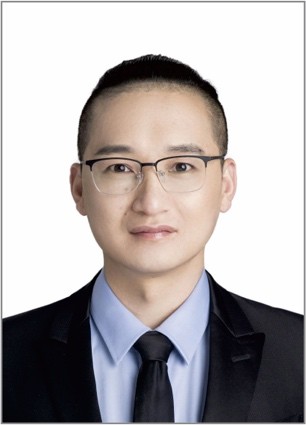
Prof. Xiaofeng Chen
Senior Engineer
Chief Research Scientist & President, Hyperchain Research Institute
Director, Chongqing Advanced Blockchain Research Institute
Title: Blockchain Frontier Technology Exploration and International Standardization
Abstract:
As blockchain evolves into a foundational infrastructure for cloud computing, digital assets, and data circulation, international standardization has become essential for ensuring interoperability, security, and global scalability. This keynote presents a dual-driven framework in which frontier technological innovation and large-scale industrial applications jointly accelerate blockchain standardization. It introduces next-generation consortium blockchain architectures featuring scalable sharding, cross-chain interoperability, privacy-preserving computation, and regulatory-friendly governance, alongside real-world deployments in city-level infrastructure and trusted data platforms. Looking ahead, the talk explores two transformative directions: (1) deep integration of Blockchain + AI to enable auditable and trustworthy intelligent systems, and (2) the extension from native digital assets to data elements and real-world asset (RWA) tokenization, supporting trusted data markets and digital economies. By bridging cutting-edge research, global standards development (IEEE, ISO, ITU-T), and industrial implementation, this keynote outlines a practical roadmap for building secure, interoperable, and scalable digital infrastructure in the AI era.
Bio:
Prof. Xiaofeng Chen is a leading expert in blockchain, data elements, artificial intelligence, Web 3.0, and international standardization. He currently serves as Chief Research Scientist and President of the Hyperchain Research Institute, and Director of the Chongqing Advanced Blockchain Research Institute. He is also a Ph.D. industry supervisor at the University of Chinese Academy of Sciences. Prof. Chen plays an active leadership role in global standardization. He serves as a Member of the IEEE SA Standards Board (2025–2026), Vice Chair of IEEE SASB NesCom, Board Member of IEEE SASB AudCom, and liaison to IEEE Young Professionals. He is a registered expert of ISO/TC 307 (Blockchain and Distributed Ledger Technologies) and ITU-T SG21 on distributed ledger technologies. He also serves as Secretary-General of IEEE C/BDLSC and holds multiple leadership roles across IEEE blockchain and digital trust committees. He has led or participated in more than 60 international standards (ISO, ITU-T, IEEE), over 20 national standards in China, and more than 200 industry and consortium standards. As project leader, he has undertaken national key R&D programs under China’s Ministry of Science and Technology, as well as major provincial and ministerial projects on trusted data spaces, privacy-preserving computation, blockchain regulation frameworks, and cross-chain interoperability. Prof. Chen has published over 40 high-quality academic papers, and holds more than 60 invention patents. His recent research contributions include asynchronous multi-party secure computation, cross-chain interoperability, federated learning frameworks, and blockchain-based trusted data circulation architectures.